
In December we lost one of the founders of the Palladium. George K. Rahdert was part of the group of St. Petersburg visionaries who purchased the Christian Science Church building at Third Street and Fifth Avenue and converted it into a theater designed to provide an affordable professional venue for the community.
I talked to George a lot after taking over the Palladium and he was among the founders honored at a special gala in 2015.
I was also lucky enough to work with George during my time at what is now known as the Tampa Bay Times. He was one of the countries’ best known First Amendment attorneys.
The Sarasota Herald-Tribune just published a very comprehensive story about George’s life that includes his involvement with the Palladium. I encourage you to read that story below. And I want to thank George and all the founders of the Palladium at SPC, for creating this incredible theater. I’m proud to be part of it.
Here’s a link to the Sarasota Herald-Tribune story.
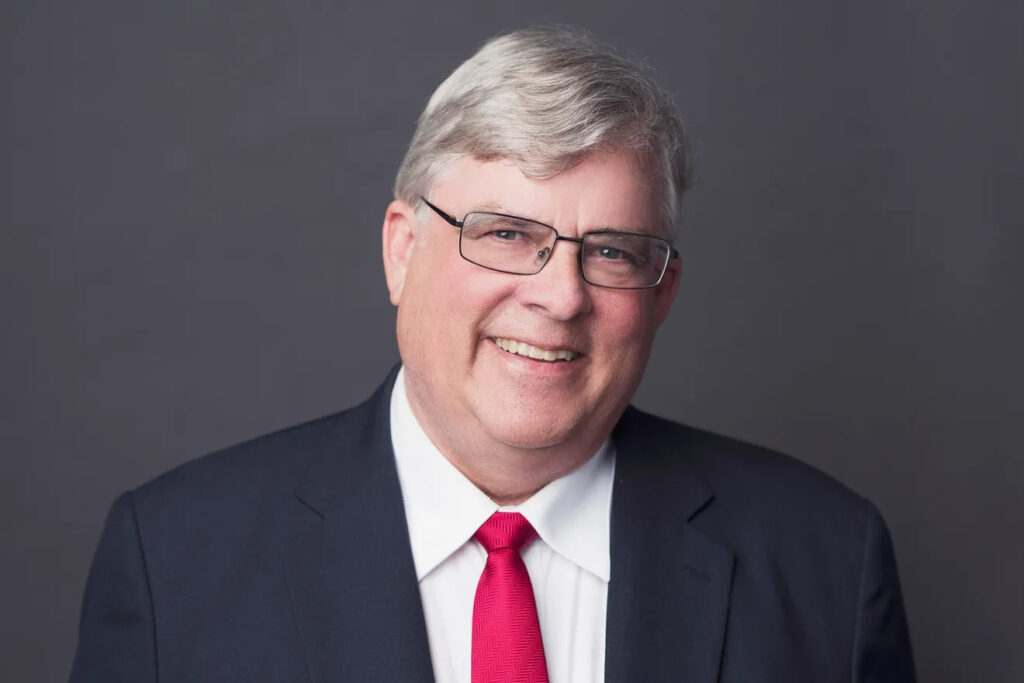
George K. Rahdert, longstanding Florida First Amendment defender, dies
Rahdert represented a reporter jailed for protecting an anonymous source and companies like the St. Petersburg Times and the Poynter Institute.
By Stephany Matat/USA TODAY NETWORK
George K. Rahdert, a prominent First Amendment attorney who represented a reporter jailed for protecting an anonymous source and companies like the St. Petersburg Times and the nonprofit Poynter Institute, died Dec. 8 in St. Petersburg. He was 75.
He died after a brief battle with pancreatic cancer, according to the obituary provided by his family. A celebration of life is scheduled for Jan. 17 in St. Petersburg.
Rahdert had been a practicing attorney for about 50 years after graduating Yale Law School, and focused his career on property, disability and First Amendment law. Before he was 40, Rahdert argued and won two U.S. Supreme Court cases, his obituary said.
One of these cases involved a Florida paper and affirmed reporters could publish truthful information under the First Amendment. Another was a foundational case that resulted in the creation of the Americans with Disabilities Act of 1990.
Until his death, Rahdert had represented the Poynter Institute, a nonprofit media institute and newsroom which helps journalists through trainings and guidance on ethics and media literacy. As an attorney, he could “play offense as well as defense” by advocating for news media against defamation claims and for open access to public records and public meetings, said Paul Tash, chairman of the Poynter Institute Board of Trustees.
One notable case Rahdert was involved in was that of Tim Roche. In the 1990s, Roche worked for a Florida newspaper and was subpoenaed to disclose the name of an anonymous source who shown him sealed court documents in a child custody case. Roche refused and was later sentenced to 30 days in jail, but released after 18 days.
His case led to the passage of a Florida bill that would have protected reporters who refused to disclose confidential sources in court, but it was vetoed by then-Gov. Lawton Chiles in 1993. But in 1998, Chiles signed a similar law allowing reporters to refuse to disclose source identities.
Rahdert defended independence of then-St. Pete Times.
Rahdert also represented the St. Petersburg Times, now known as the Tampa Bay Times, in a case between the newspaper and investor Robert M. Bass.
Bass sought to “leverage his purchase of his minority ownership interests into a hostile takeover of the paper,” said Alison Steele, a First Amendment attorney who worked closely with Rahdert over the years and formerly was a partner in a firm with him.
It didn’t work, and The Times still is owned by the Poynter Institute.
To his colleagues and friends, Rahdert was characterized as a loyal, lifelong defender of the First Amendment. “When George is your friend, you have a friend forever,” Steele said.
Steele met Rahdert in 1987 before she graduated law school from Stetson University because he needed assistance with a First Amendment case involving the newspaper. She worked with him and joined the firm after passing the bar exam. She described Rahdert as a cheerleader of her career.
“On the first day that I opened my firm on Jan. 2, 2017, he sent me a gorgeous arrangement of flowers, and I mention that simply because that’s just George,” Steele said.
Tash said Rahdert has a significant legacy with Poynter and was so “intimately familiar with the history of the company and of the school.” He was a “tremendously valuable advocate,” along with being a good friend and a confidant.
“He was loyal to the First Amendment and to his friends,” Tash said.
Rahdert was ‘early investor’ in downtown St. Pete
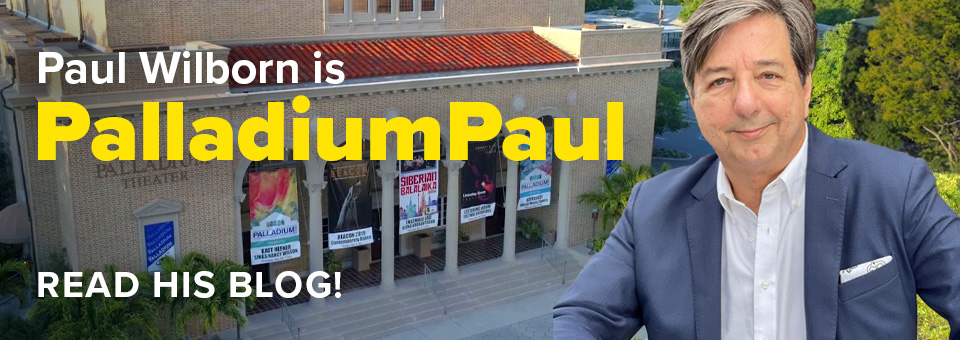
Outside the world of lawyers and free speech defense, Rahdert was an “early investor in downtown St. Pete,” said Paul Wilborn, the executive director of the Palladium Theater in St. Petersburg. Rahdert was one of the founders of the theater, and he invested into rehabilitating multiple historic buildings and homes across the city.
“George was a pioneer and integral in the renovation and historic preservation of downtown St. Petersburg. His positive impact cannot be overstated,” according to his obituary.
While Rahdert was at Duke University, he had met Eugene Patterson, a Pulitzer Prize-winning editor of the Atlanta Journal Constitution and former editor of the St. Petersburg Times. His relationship and friendship with Patterson spanned decades of his life; Rahdert’s been described as a protege of Patterson and was Patterson’s spokesperson up until his death in 2013.
Rahdert knew many free speech defenders, journalists and lawyers across Florida. He “knew where the First Amendment was, but he also knew the context of everything,” said Ben Eason, a publisher who owns Creative Loafing Atlanta.
Eason said he would get lunch with Rahdert to discuss different aspects of the media. Although Rahdert was hands-on and involved in multiple cases for media organizations, Eason described him as a “really good observer of what’s going on in the media.”
“I think The Times and George were just made for each other,” Eason said.
‘A family man’: Rahdert’s background
Rahdert was born in 1950 in Bloomington, Indiana and grew up in Bowling Green, Ohio, according to his obituary. He attended Duke University for his undergraduate degree and received his law degree (J.D.) from Yale Law School. Then he moved to St. Petersburg and clerked for a federal circuit judge.
His wife June Morris knew Rahdert for 33 years and was married to him for about 12 years. She described her loss as that of a best friend, one she would walk on the beach with and talk about faith. She recalled him telling her during beach walks how God painted a different picture of the sunset and the afterglow every night.
Although he was accomplished, her husband was kind and humble and never made anybody feel small, Morris said. He would comfort her in trying times by sharing his deep faith in God.
“What we leave on this earth, the best thing we could leave to our children and family members is the memories,” Morris said. “He did plenty of that, leaving the memories.”
His brother Mark Rahdert, an emeritus law professor at Temple University in Philadelphia, said George was a big influence on him and that they were very close throughout their lives, despite living in different areas of the country.
Rahdert was passionate about free speech and expression, but was also an avid member of his church and spent the last 15 years attending St. Andrews Lutheran Church in St. Petersburg. He also adored his kids and grandkids, Mark said.
“I just think back to those times and how much it meant to me and my development to have a brother who I admired so much and who was so much a part of my daily life and such a good influence on me in so many ways,” Mark said. “That’s really what I think back to all the time.”
George Rahdert is survived by his wife and his two siblings, Mark Rahdert and Kathryn Miller. He had four sons: Karl, Jake, Luke and Mike. He’s also survived by grandchildren and several nieces and nephews.






Leave a Reply